
UK Government's New Digital ID Cards Could Be Biblical End Times Prophecy
Are digital ID cards a sign of the end times? Discover what the Bible says about the Mark of the Beast, how it relates to modern technology, and how Christians can respond with wisdom and faith.
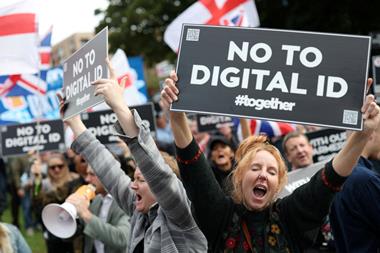
Digital IDs and the Mark of the Beast: Navigating Faith, Fear, and Discernment
“He causes all, both small and great, rich and poor, free and slave, to receive a mark on their right hand or on their foreheads, so that no one may buy or sell unless he has the mark…”
— Revelation 13:16-17 (ESV)
In recent years, governments around the world have explored new forms of digital identification—systems that verify a person’s identity using technology such as facial recognition, fingerprints, or QR codes. These systems are often promoted as tools for convenience, security, and efficiency.
But among many Christians, a deeper concern has emerged: could these systems be connected to what the Bible calls the Mark of the Beast?
The question isn’t new. Throughout history, believers have wondered if emerging technologies might play a role in end-time prophecy. Yet the digital revolution has reignited the debate with new urgency. In a world where access to travel, healthcare, banking, and even shopping can be controlled by digital means, some see chilling parallels with Revelation 13’s warning about a mark that governs who can “buy or sell.”
So what exactly do Christians believe about this connection? And how can we approach the issue with both biblical faithfulness and wise discernment?
1. The Biblical Root of the Concern
The Mark of the Beast appears in Revelation 13, where John describes two beasts—the first representing oppressive worldly power, and the second symbolising a deceptive, false-prophetic system that persuades humanity to worship the first.
This second beast “forces all people… to receive a mark on their right hand or forehead.” The mark is linked to the number 666, which John calls “the number of a man.” For centuries, Christians have debated what that number represents. Some believe it symbolises imperfection or rebellion, others that it cryptically references the Roman Emperor Nero, a persecutor of the early Church.
But in every interpretation, the underlying theme is clear:
The “mark” symbolises allegiance — a visible or invisible sign of loyalty to worldly powers opposed to God.
It is not only about technology or commerce; it is about worship and loyalty.
2. Why Some Christians Link It to Digital IDs
a) The Control of Buying and Selling
Revelation’s prophecy ties the “mark” to economic restriction: no one could buy or sell without it. This language resonates strongly in a digital age where cashless transactions, QR codes, and biometric verification control access to goods and services.
If, one day, digital ID systems became mandatory for everyday purchases—or if dissenters were “locked out” of society—it could resemble that biblical scenario.
b) Biometric and Technological Convergence
Digital IDs aren’t just cards; they often include biometric data like fingerprints, facial scans, or iris patterns. In many countries, this data links directly to bank accounts, medical records, and travel permissions.
For some believers, that level of integration feels uncomfortably close to a world where the state—or a global system—could decide who participates in the economy.
c) Precedents in Legal and Ethical Disputes
As Premier Christianity reports, there have already been court cases involving Christians who refused biometric scans or ID systems, claiming it violated their conscience.
In one instance, a U.S. worker lost their job for refusing to use a hand-scanning machine, seeing it as a precursor to the mark.
Parents in some schools have protested ID badges or microchip systems, citing Revelation 13 as their concern.
These cases illustrate how real the tension can feel between faith and modern systems of control.
d) Growing Distrust of Global Systems
For many, it’s not just about the technology but who controls it. Centralised data systems, global digital currencies, and surveillance networks raise ethical questions about privacy, freedom, and accountability.
When Scripture warns of a world system demanding allegiance, it’s easy to see why Christians are cautious about anything that consolidates global power under one controlling entity.
3. Why Other Christians Urge Caution
While it’s important to take these concerns seriously, theologians remind us to interpret Revelation wisely and not react in fear.
a) Revelation is Highly Symbolic
The Book of Revelation uses vivid imagery—beasts, dragons, and marks—not primarily to describe future technology, but to reveal spiritual truths about good and evil, loyalty and idolatry.
The “mark” may represent a spiritual seal of allegiance rather than a literal implant or microchip. Those who worship the beast are “marked” by their loyalty to a corrupt system; those who belong to Christ are “sealed” by the Holy Spirit (Revelation 7:3; Ephesians 1:13).
b) Historical Context Matters
When John wrote Revelation, Christians lived under the oppressive rule of Rome. To buy or sell often meant participating in emperor worship—acknowledging Caesar as “lord.” Refusing could lead to economic exclusion or persecution.
So for the first readers, “the mark” was not futuristic; it was a present reality of compromise and faithfulness. Many scholars believe the prophecy’s meaning continues symbolically in every age whenever believers are pressured to conform to systems contrary to God’s will.
c) Fear Can Lead to False Prophecy
Throughout history, well-meaning Christians have mistaken technological or political developments as the “mark.” From barcodes and credit cards to COVID health passes, many such predictions have faded over time.
The danger is that speculation can overshadow the gospel, sow fear, and discredit Christian witness. Instead of focusing on who the Beast might be, Scripture calls us to remain steadfast in our devotion to the Lamb.
4. A Faithful Christian Response
How, then, should believers live in this digital age—awake but not afraid?
a) Ground Yourself in Scripture
Before forming conclusions, immerse yourself in the whole counsel of God’s Word. Revelation must be read alongside the Gospels, epistles, and prophetic writings. Its central message is victory in Christ, not fear of technology.
“For God has not given us a spirit of fear, but of power and love and a sound mind.” — 2 Timothy 1:7
b) Practice Discernment in the Digital World
Christians should ask critical questions:
Who owns or controls my personal data?
How could this system be misused in the future?
Does this compromise my conscience or my loyalty to Christ?
Being cautious doesn’t mean being paranoid; it means being wise stewards of both our freedom and our faith.
c) Stand for Freedom of Conscience
If digital systems ever demand that believers compromise their faith, the Church must stand firm—peacefully, legally, and prayerfully. History shows that Christians have often had to resist systems that demanded allegiance to anything other than God.
d) Live with Peace and Purpose
The mark of true discipleship is not fear of the Beast but faith in the Lamb. The enemy wants believers paralysed by anxiety. But our hope is not in avoiding technology; it is in living faithfully whatever the world system demands.
“Here is a call for the endurance and faith of the saints.” — Revelation 13:10
5. The Bigger Picture: Faith Over Fear
As technology evolves, the line between convenience and control may blur. But Revelation does not call Christians to panic—it calls them to persevere.
The real question is not whether a digital ID is the mark of the Beast, but whether we bear the mark of Christ.
Those sealed by His Spirit, redeemed by His blood, and walking in His truth have nothing to fear.
The systems of this world will rise and fall, but God’s Kingdom stands forever.
Reflection Questions
When you think about digital identity and technology, what emotions arise—fear, curiosity, or peace?
How can you stay informed without becoming anxious?
What practices help you remain grounded in Christ rather than swayed by world events?
Final Encouragement
Let us be believers who are informed but not fearful, vigilant but not cynical.
Whether digital IDs are a neutral tool or a step toward control, our calling remains the same: to live as faithful witnesses of Jesus Christ in every generation.
“Be faithful unto death, and I will give you the crown of life.” — Revelation 2:10